Manuele Aufiero, Michael Martin, Massimiliano Fratoni
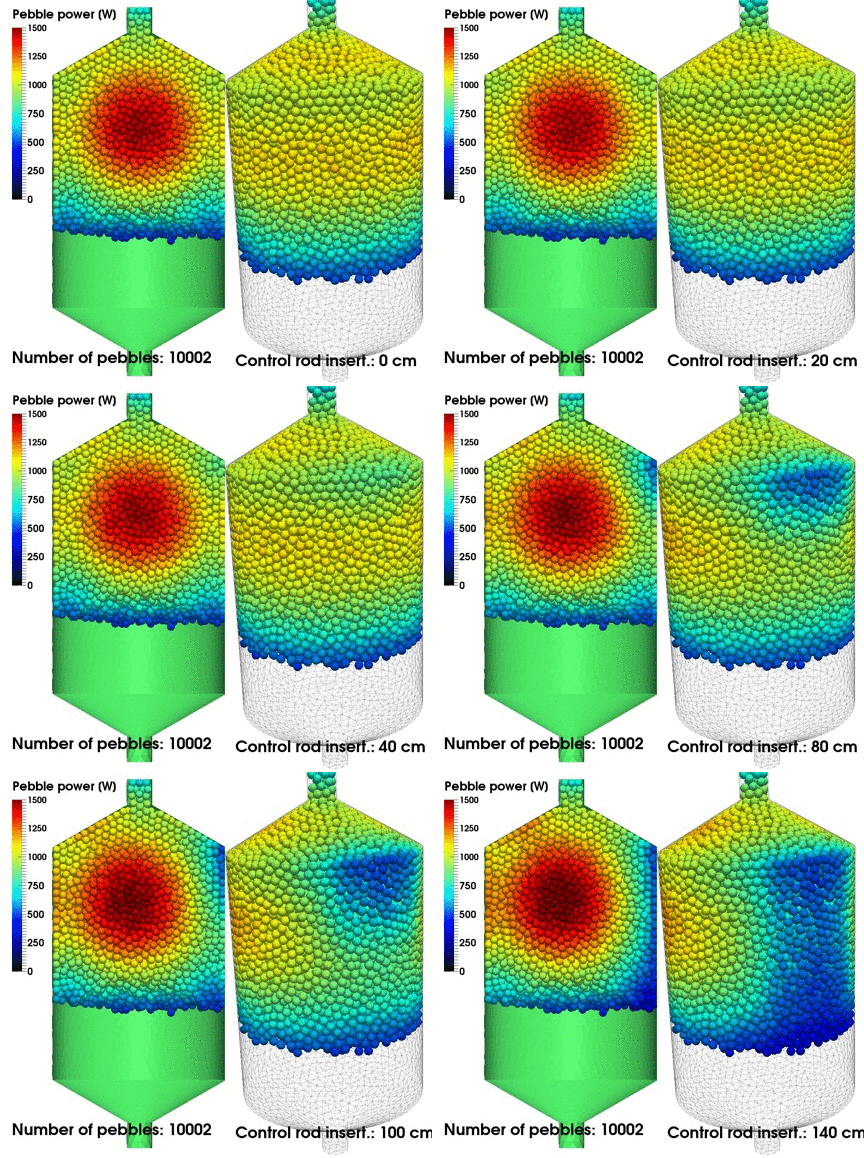
Coupled neutronics-thermal/hydraulics simulations are of great interest for the analysis and design of nuclear reactors. Ongoing studies of advanced and GEN-IV reactors call for the adoption of accurate modeling tools that are based on Monte Carlo neutron transport and CFD-based T/H solutions. In this framework, the capability to propagate uncertainties in the input data through the coupled simulation is highly desirable.
Recently, Generalized Perturbation Theory (GPT) methods have been implemented in continuous energy Monte Carlo codes, broadly expanding their capabilities. Some of these methods (e.g., available in the Serpent code) are suitable to be adopted in combination with Open Source finite-volume libraries for continuum mechanics solvers (e.g., the OpenFOAM C++ multiphysics toolkit).
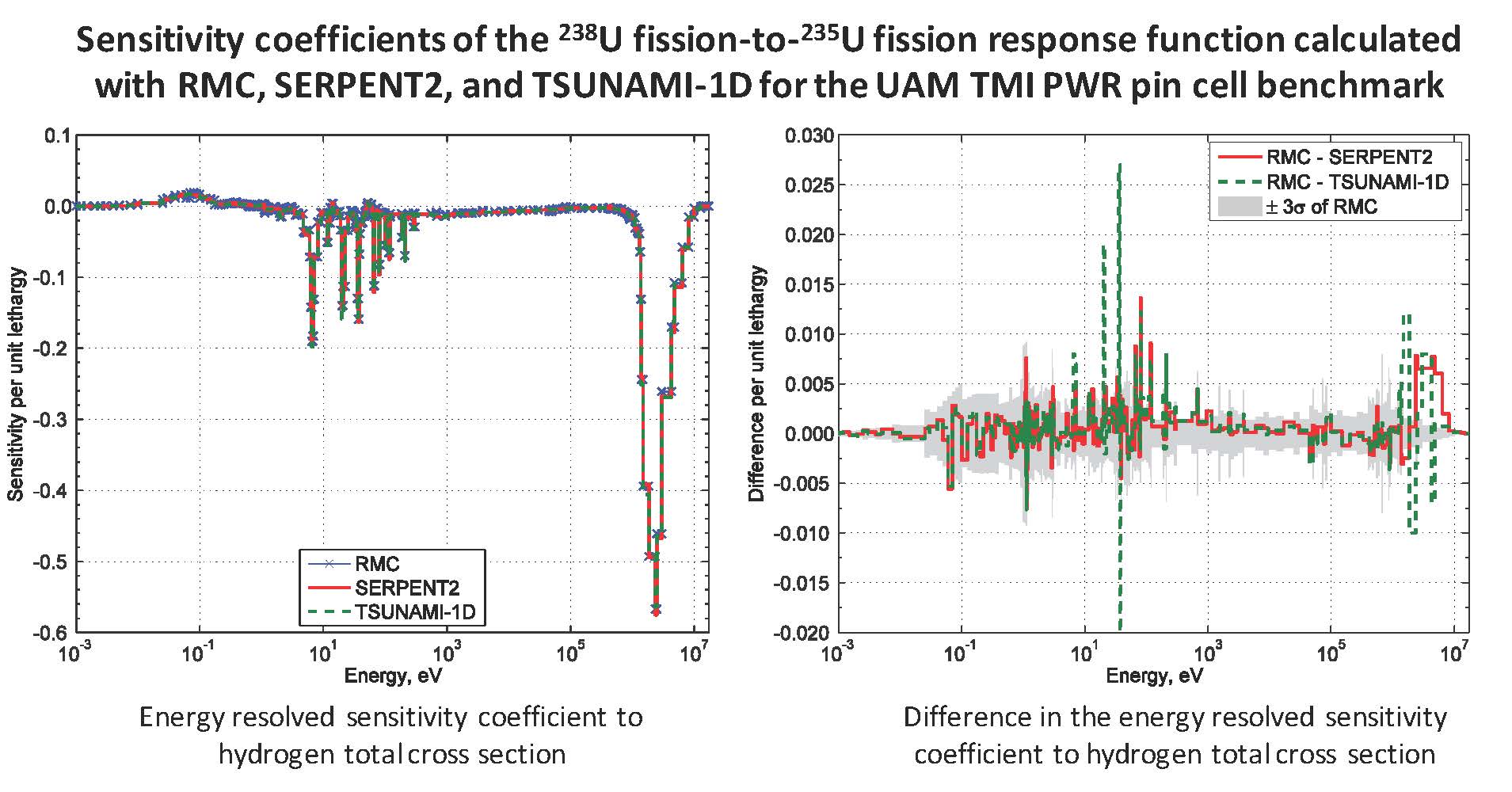
The present project involves the projection of the input uncertainties and the reactor generalized responses onto sets of orthogonal basis functions, along with the adoption of extended GPT methods for the calculation of sensitivities in the coupled problems. The comparison of nuclear data uncertainty propagation results against standard methods in simple benchmark cases shows that the new approach might provide a reliable and efficient option for Uncertainty Quantification in multiphysics problems.
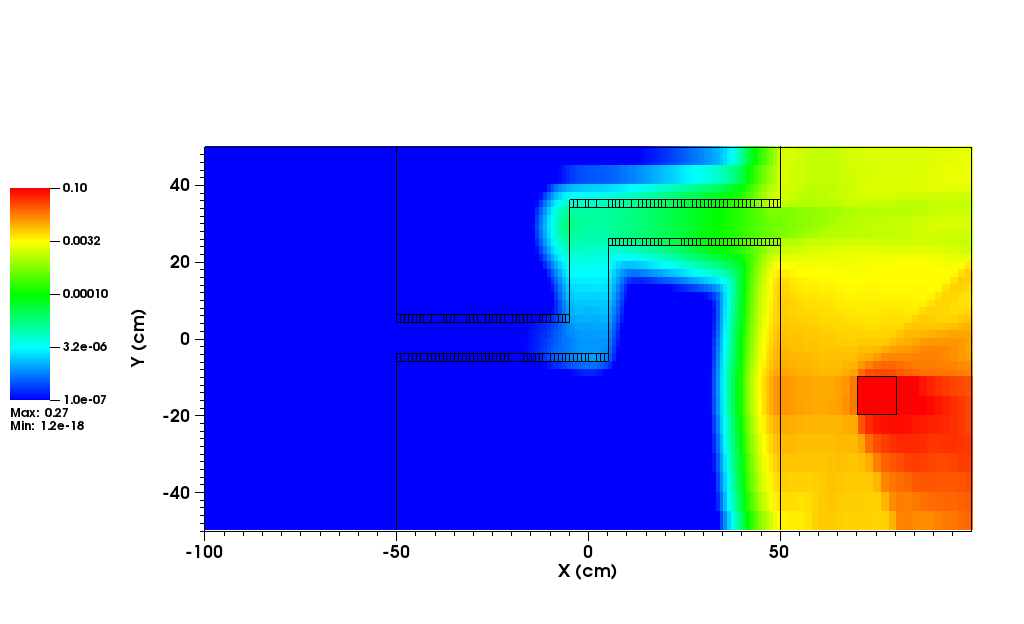
 Hybrid methods for radiation transport aim to use the speed and uniform uncertainty distribution obtained from deterministic transport to accelerate and improve performance in Monte Carlo transport. An effective use of this type of transport hybridization can lead to a reduced uncertainty in the solution and/or a faster time to a solution. However, not all hybrid methods work for all types of radiation transport problems. In problems where the method is not well-suited for the problem physics, a hybrid method may perform more poorly than analog Monte Carlo, leading to wasted computer time and energy, or even no acceptable solution.